Youth, Health and a Burning Planet: Africa’s Next Generation Must Lead the Climate-Health Turnaround
-
by
Zulu Justine
- 1 Comment on Youth, Health and a Burning Planet: Africa’s Next Generation Must Lead the Climate-Health Turnaround
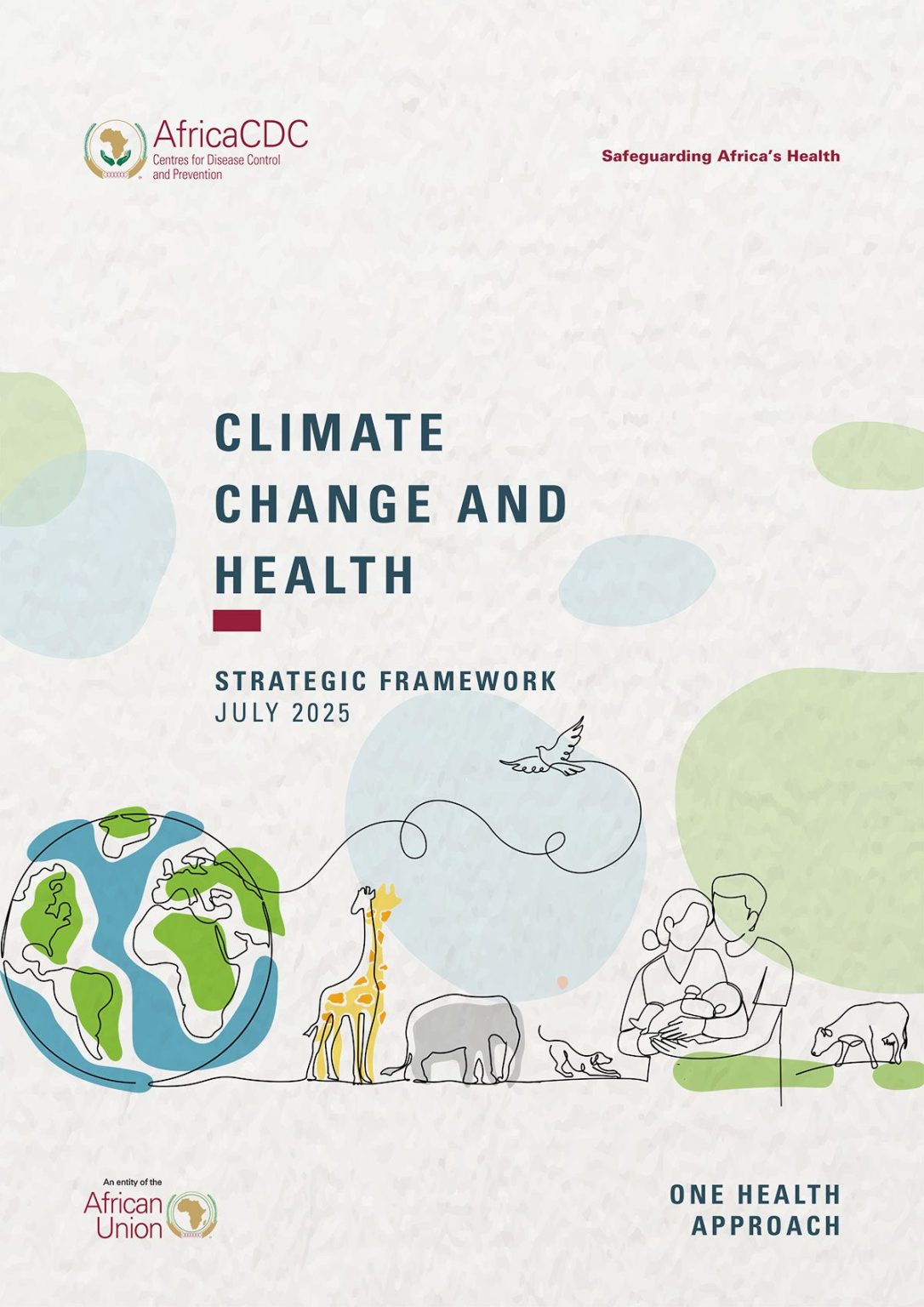
When the Africa Centres for Disease Control and Prevention released its Climate Change and Health Strategic Framework in July 2025, it did more than publish a plan, it issued a challenge. The document makes plain that climate change is already a health crisis on this continent, more than half of the public-health events recorded between 2001 and 2021 are linked to climate change, and the scale of what lies ahead is staggering. The report flags eye-opening projections, millions of deaths and trillions in economic loss by mid-century and lays out a costed, practical roadmap. That roadmap is smart, rigorous and justice-minded. But it will fail unless Africa’s largest political force its youth are invited not just to consult, but to lead.
This is an op-ed for policymakers, funders and anyone who cares about healthy futures: put young people at the centre of climate-health action. Here’s why, and how.
The argument in one line
Young people are uniquely positioned morally, demographically and technically to turn the Africa CDC’s strategic aims into outcomes. Empowering youth is not a sideline; it is the most cost-effective path to building the climate-resilient health systems this framework demands.
1) Moral authority and lived experience
Youth in Africa are not abstractions. They are frontline witnesses to floods, failed harvests, vector-borne outbreaks in new highlands and classrooms emptied by illness. The Africa CDC rightly frames climate-health as an equity issue: the continent bears a disproportionate burden despite contributing minimally to the greenhouse gases that drive warming. Young people, especially girls, students, rural youth and informal workers, experience that injustice in daily life. Their testimony sharpens urgency, reframes priorities and keeps interventions grounded in equity and rights. The framework’s emphasis on Equity, Justice & Inclusion and on community engagement.
2) Political leverage and sustainability
Youth movements shift public opinion, and public opinion shapes political will, one of the framework’s explicit selection criteria for prioritization. Mobilized young constituencies can push ministries to include health in Nationally Determined Contributions, demand heat-health action plans, and insist that NAPs and HNAPs are not empty boxes. The framework itself is a call for country ownership, legal frameworks and cross-sector partnerships; young people organized, networked and savvy with communications can be the persistent political engine that keeps implementation on track and funds flowing. The 5-year implementation plan in the framework carries a clear price tag for action; sustained civic pressure will be essential to match commitments with budgets.
Evidence matters and it’s on our side
The Africa CDC document does the heavy lifting: it synthesizes climate-health evidence, prioritizes vulnerabilities (vector-borne disease, waterborne disease, heat, nutrition and airborne disease), and lays out governance, financing and surveillance pillars. It does not romanticize youth; it gives a rigorous menu of interventions that work when implemented with good governance and community participation. Pointing to that evidence strengthens the case that youth engagement is a pragmatic lever — not a feel-good add-on.
To be sure
Some will say youth lack experience for hard political negotiation, or that policymakers can’t cede technical roles to non-experts. Valid point. But this is precisely why engagement must be structured: invest in youth capacity building, create formal seats for youth on national and regional steering committees, pair youth networks with technical mentors, and ensure accountability mechanisms are clear. The framework already prioritizes capacity building, governance and accountability, a natural scaffolding for meaningful youth inclusion.
Concrete first steps (practical, low-cost, high-impact)
- Youth seats in governance – formalize youth representation in country Climate-Health Technical Working Groups and Africa CDC TWGs. This converts voice into influence.
- Micro-grants for youth innovation – allocate a measurable share of national climate-health funds to youth-led pilots for surveillance, WASH, heat-health alerts and community mental health. Pilots scale fast when paired with regional coordination.
- Youth-focused training hubs – roll out short, accredited programs in climate-health surveillance and risk communication through existing centres of excellence the framework recommends.
- Mandate youth in reporting – require a youth-authored annex to national progress reports and M&E inputs, to track equity and lived experience metrics.
The ask
Policymakers: revise budgets and governance rules to make youth participation binding. Donors: fund youth capacity and multi-year scaling, not one-off campaigns. Health agencies: open data, mentorship and co-design slots for youth innovators. Young people, demand seats, bring evidence, and be ready to build, not just protest.
The Africa CDC framework gives us a clear, evidence-based path for safeguarding health in a warming world. It names the vulnerabilities, sets priorities, and budgets responses. But a technical plan without political oxygen will not reach people. Youth are the oxygen. If we do not put them at the centre now, training them, funding them, and giving them authority. We risk another five years of plans on paper while communities pay with illness and lives. The moral, practical and democratic case is unambiguous: meaningful youth leadership is not optional; it is essential. Let the framework guide the way and let the youth lead.
The views expressed in this article are solely those of the author and do not necessarily reflect the views of Climate & Health Youth Network

Comment (1)
Besa Bwalya
I love the fact that it addressed clearly on how climate and health are to be integrated at all levels in a society.. this is really crucial because a lot of people especially in rural areas they don’t really get a clear picture of how climate and health are symmetrical in nature when it comes impacts, these two have a reinforcing relationship where each domain has a significant impact on the other…