Does Zambia’s NDC Pass the Health Test?
 Zulu Justine
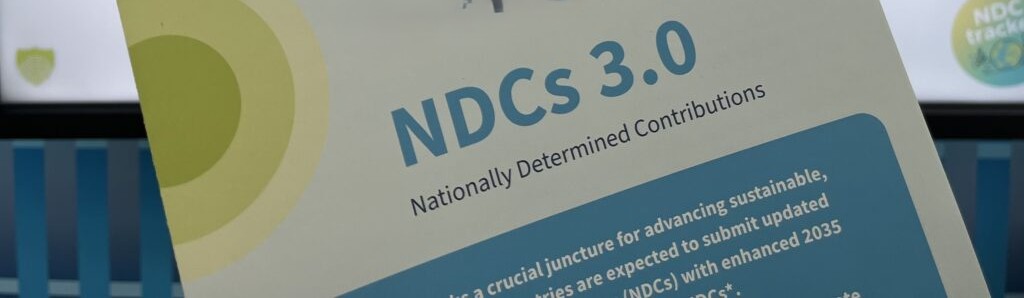
Zambia’s NDC 3.0 documents climate devastation in painful detail. What it still fails to do is treat that devastation as the public health emergency it already is.
A Crisis Already Here
For millions of Zambians, climate change is no longer a warning about the future. It is hunger after drought, disease after floods, and exhaustion in health centres pushed beyond their limits. Yet Zambia’s Nationally Determined Contribution 3.0 (NDC 3.0), despite its technical sophistication, still treats health as a supporting issue rather than the frontline of climate impact. This is a dangerous miscalculation.
Zambia’s own climate plan admits the scale of the crisis. The 2023-2024 drought affected 9.8 million people across 84 districts and cost the Government an estimated USD 3.5 billion. Health systems were among the hardest hit sectors. This was not a modelling exercise. It was a national emergency unfolding in real time.
Infrastructure Without People
And yet NDC 3.0 remains overwhelmingly infrastructure-focused. It speaks confidently about resilient buildings, green construction, water systems, and energy transition. These investments matter. But they do not keep people alive during droughts, floods, disease outbreaks, and heatwaves.
Health is where climate change hits first and hardest.
Government will rightly point to progress. NDC 3.0 recognises health as an adaptation sector. It commits to climate-resilient health facilities and improved Water, Sanitation and Hygiene systems. It acknowledges the health co-benefits of mitigation, particularly cleaner air. These are necessary foundations.
But foundations are not enough when the house is already on fire.
COP30 Has Changed the Standard
The global climate community has recognised this reality. At COP30, governments endorsed the Belém Health Action Plan, which states plainly that climate change is already placing significant strain on health systems worldwide. The Plan moves health from the margins of climate policy to its centre.
It calls for climate-informed disease surveillance and early warning systems, mental health and psychosocial support during climate shocks, continuity of essential services, and explicit protection for those most at risk especially women, children, and rural communities.
Where Zambia’s NDC Falls Short
Measured against this standard, Zambia’s NDC 3.0 does not yet pass. It relies heavily on a Health National Adaptation Plan developed in 2018, before compound climate shocks became routine. Since then, Zambia has experienced overlapping droughts, floods, cholera outbreaks, food insecurity, and energy stress.
Farmers face repeated crop failure and psychological distress. Women and girls carry heavier burdens of water collection, care work, and health risk. Community health workers are left to manage climate-sensitive diseases with limited support.
These are not peripheral issues. They are the core of climate vulnerability.
Yet mental health barely features in Zambia’s climate response. There is no clear strategy for maintaining sexual and reproductive health services during climate emergencies. Health-specific early warning systems for heatwaves and disease outbreaks remain underdeveloped. Frontline health workers arguably the most important climate responders Zambia has are still treated as an afterthought.
This Is a Political Choice
This is not a capacity problem. It is a prioritisation problem.
The Belém Health Action Plan is explicit that by COP33, countries will be expected to report what they have actually implemented, not what they promised. The era of well-written plans without delivery is closing. Zambia cannot afford to arrive at that moment with impressive sectoral coverage and a glaring health gap.
If NDC 3.0 is to be credible, its implementation must change course. Health must move from a cross-cutting mention to a central pillar of climate adaptation. That means ring-fenced climate finance for health, climate-informed disease surveillance, mental health services embedded in disaster response, and explicit safeguards for sexual and reproductive health during floods and droughts.
Community health workers are not auxiliary staff in climate crises. They are the response system.
The Test Zambia Must Now Pass
Zambia has an opportunity to lead by aligning climate action with lived reality. Climate ambition is not measured only in emissions reduced or infrastructure protected. It is measured in lives safeguarded when the rains fail, the waters rise, and the clinics overflow.
If Zambia can document a USD 3.5 billion climate disaster in its own NDC yet ignore the Belém Health Action Plan’s warning that climate change is already placing significant strain on health systems worldwide, then the failure is no longer technical, it is political.
The views expressed in this article are solely those of the author and do not necessarily reflect the views of Climate & Health Youth Network